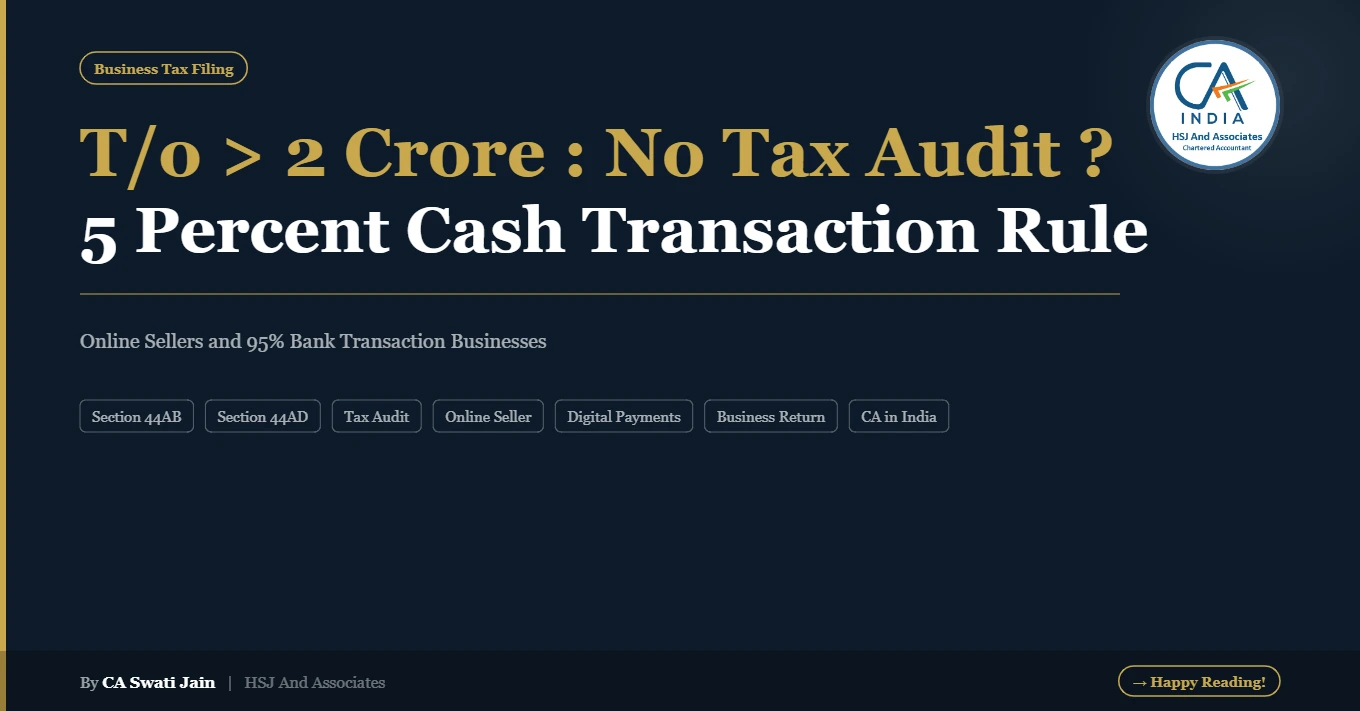
Business Turnover Above ₹2 Crore? How the 5% Rule Can Help Avoid Tax Audit
𝗖𝗮𝗻 𝗬𝗼𝘂𝗿 𝗕𝘂𝘀𝗶𝗻𝗲𝘀𝘀 𝗧𝘂𝗿𝗻𝗼𝘃𝗲𝗿 𝗕𝗲 𝗔𝗯𝗼𝘃𝗲 ₹𝟮 𝗖𝗿𝗼𝗿𝗲 𝗪𝗶𝘁𝗵𝗼𝘂𝘁 𝗮 𝗧𝗮𝘅 𝗔𝘂𝗱𝗶𝘁?
Yes, in eligible cases.
This is one of the provisions that can be particularly useful for businesses where most transactions happen through:
💳 Bank transfers
💳 UPI
💳 Payment gateways
💳 Credit/debit cards
🛒 E-commerce platforms
🏦 Other prescribed electronic modes
The Income Tax Department provides a higher turnover threshold for tax-audit purposes where cash transactions do not exceed the prescribed 5% conditions. Under the current framework, the tax-audit threshold for business can go up to ₹10 crore where cash receipts and cash payments stay within the prescribed limits.
━━━━━━━━━━━━━━━━━━━━━━━━━━━━━━━━━━━━
𝗪𝗵𝗮𝘁 𝗜𝘀 𝗧𝗵𝗲 𝟱% 𝗥𝘂𝗹𝗲? 📊
The basic idea is to encourage businesses to operate through banking and other non-cash channels.
For the higher tax-audit threshold to apply, the prescribed conditions require that cash receipts do not exceed 5% of total receipts and cash payments do not exceed 5% of total payments.
So it is important to look at both sides:
Cash Receipts → Within 5%
AND
Cash Payments → Within 5%
It is not enough to look only at cash sales.
━━━━━━━━━━━━━━━━━━━━━━━━━━━━━━━━━━━━
𝗔 𝗦𝗶𝗺𝗽𝗹𝗲 𝗘𝘅𝗮𝗺𝗽𝗹𝗲
Suppose an online seller has:
Total sales: ₹4 crore
Cash receipts: ₹2 lakh
Cash receipts are only 0.50% of total sales.
Now suppose:
Total business payments: ₹3.50 crore
Cash payments: ₹5 lakh
Cash payments are approximately 1.43%.
If the other statutory conditions are satisfied, the business may fall within the higher tax-audit threshold applicable to businesses where the cash conditions are met.
💡 This is why businesses that operate predominantly through banking channels can benefit from understanding the provision properly.
━━━━━━━━━━━━━━━━━━━━━━━━━━━━━━━━━━━━
𝗪𝗵𝘆 𝗜𝘀 𝗧𝗵𝗶𝘀 𝗩𝗲𝗿𝘆 𝗨𝘀𝗲𝗳𝘂𝗹 𝗙𝗼𝗿 𝗢𝗻𝗹𝗶𝗻𝗲 𝗦𝗲𝗹𝗹𝗲𝗿𝘀? 🛒
Consider an online seller operating through:
Amazon
Flipkart
Own website
Payment gateway
UPI
Bank transfers
Most of the collections are already routed through identifiable digital channels.
The business may have a turnover significantly above ₹2 crore while having very limited cash transactions.
For such businesses, the 5% cash condition can become particularly relevant when determining the applicable tax-audit threshold.
However, the business should still maintain proper books and supporting records.
Higher audit threshold does not mean lower compliance responsibility.
━━━━━━━━━━━━━━━━━━━━━━━━━━━━━━━━━━━━
𝗪𝗵𝗮𝘁 𝗔𝗯𝗼𝘂𝘁 𝗖𝗮𝘀𝗵 𝗘𝘅𝗽𝗲𝗻𝘀𝗲𝘀? 💰
This is where many businesses make a mistake.
They calculate only:
Cash Sales ÷ Total Sales
and conclude that cash is below 5%.
But the relevant analysis also considers cash payments.
For example:
Total business payments: ₹2 crore
Cash payments: ₹12 lakh
Cash payments = 6%
In such a situation, the business cannot simply say:
"Our cash sales are less than 5%, so we qualify."
Both the prescribed cash-receipt and cash-payment conditions need to be examined.
━━━━━━━━━━━━━━━━━━━━━━━━━━━━━━━━━━━━
𝗧𝗵𝗲 𝟱% 𝗥𝘂𝗹𝗲 𝗜𝘀 𝗡𝗼𝘁 𝗮 𝗣𝗿𝗼𝗳𝗶𝘁 𝗥𝗮𝘁𝗲 𝗥𝘂𝗹𝗲 ⚠️
This is another common confusion.
The 5% condition relates to cash transactions, not the percentage of profit declared by the business.
For example:
A business cannot say:
"I have shown 5% profit, so I don't need a tax audit."
That is completely different.
The relevant analysis is based on the prescribed cash receipts and cash payments, along with the applicable tax-audit provisions.
━━━━━━━━━━━━━━━━━━━━━━━━━━━━━━━━━━━━
𝗪𝗵𝗮𝘁 𝗔𝗯𝗼𝘂𝘁 𝗦𝗲𝗰𝘁𝗶𝗼𝗻 𝟰𝟰𝗔𝗗? 📄
Section 44AD and tax-audit provisions are related, but they should not be mixed up.
Under Section 44AD, the presumptive taxation turnover limit is generally:
₹2 crore
or
₹3 crore where the prescribed 5% cash condition is satisfied.
This is different from the tax-audit threshold, which can go up to ₹10 crore where the prescribed cash conditions are satisfied.
So:
₹2 crore / ₹3 crore → relevant to Section 44AD presumptive taxation
Up to ₹10 crore → relevant to the higher tax-audit threshold under Section 44AB conditions
These are two different provisions.
━━━━━━━━━━━━━━━━━━━━━━━━━━━━━━━━━━━━
𝗧𝗵𝗶𝘀 𝗖𝗮𝗻 𝗕𝗲 𝗩𝗲𝗿𝘆 𝗨𝘀𝗲𝗳𝘂𝗹 𝗙𝗼𝗿 𝗕𝗮𝗻𝗸-𝗕𝗮𝘀𝗲𝗱 𝗕𝘂𝘀𝗶𝗻𝗲𝘀𝘀𝗲𝘀 🏦
Businesses that receive and make most payments through banking channels should properly track:
📊 Total receipts
📊 Cash receipts
📊 Total payments
📊 Cash payments
📊 UPI receipts
📊 Payment gateway collections
📊 E-commerce settlements
📊 Bank transfers
This makes it much easier for the CA to determine whether the prescribed 5% conditions are satisfied.
━━━━━━━━━━━━━━━━━━━━━━━━━━━━━━━━━━━━
𝗖𝗼𝗺𝗺𝗼𝗻 𝗠𝗶𝘀𝘁𝗮𝗸𝗲𝘀 𝗪𝗲 𝗦𝗲𝗲
❌ Looking only at cash sales.
❌ Ignoring cash expenses.
❌ Treating UPI as cash merely because it is an instant payment.
❌ Assuming ₹2 crore is always the final tax-audit limit.
❌ Confusing the ₹3 crore 44AD limit with the tax-audit threshold.
❌ Not reconciling payment-gateway and e-commerce settlements with books.
❌ Maintaining incomplete bank records.
━━━━━━━━━━━━━━━━━━━━━━━━━━━━━━━━━━━━
𝗪𝗵𝗮𝘁 𝗪𝗲 𝗥𝗲𝗰𝗼𝗺𝗺𝗲𝗻𝗱 𝗙𝗼𝗿 𝗢𝗻𝗹𝗶𝗻𝗲 𝗦𝗲𝗹𝗹𝗲𝗿𝘀
If your business is predominantly digital, don't wait until the end of the year to check the 5% condition.
Instead, maintain a monthly tracking system:
📌 Total sales
📌 Cash sales
📌 Digital collections
📌 Total payments
📌 Cash expenses
📌 Bank payments
📌 Payment gateway settlements
📌 Marketplace settlements
This gives you a much clearer picture before preparing the Income Tax Return.
━━━━━━━━━━━━━━━━━━━━━━━━━━━━━━━━━━━━
𝗛𝗼𝘄 𝗛𝗦𝗝 𝗔𝗻𝗱 𝗔𝘀𝘀𝗼𝗰𝗶𝗮𝘁𝗲𝘀 𝗛𝗲𝗹𝗽𝘀
At HSJ And Associates, we don't look at turnover alone when reviewing whether a business needs a tax audit.
We look at the overall transaction pattern.
Our review can include:
🔎 Turnover and gross receipts
🔎 Cash receipts
🔎 Cash payments
🔎 Bank transactions
🔎 E-commerce settlements
🔎 Payment gateway transactions
🔎 Books of account
🔎 Applicable presumptive taxation provisions
🔎 Tax-audit applicability
The objective is to ensure that the Income Tax Return is prepared based on the actual transaction profile of the business, rather than simply applying a ₹2 crore figure.
━━━━━━━━━━━━━━━━━━━━━━━━━━━━━━━━━━━━
𝗧𝗵𝗲 𝗜𝗺𝗽𝗼𝗿𝘁𝗮𝗻𝘁 𝗣𝗼𝗶𝗻𝘁
Crossing ₹2 crore turnover does not automatically mean that every business must undergo tax audit.
At the same time, the higher threshold should not be treated as an automatic exemption.
The actual transaction data must be checked against the applicable statutory conditions.
For an online seller or bank-heavy business, maintaining clean digital records can therefore be very important.
The benefit comes from the nature of your transactions — not simply from crossing or staying below a turnover number.
━━━━━━━━━━━━━━━━━━━━━━━━━━━━━━━━━━━━
𝗞𝗲𝘆 𝗧𝗮𝗸𝗲𝗮𝘄𝗮𝘆 🎯
📌 A business crossing ₹2 crore turnover does not automatically mean tax audit in every situation.
📌 The higher tax-audit threshold can apply where the prescribed cash receipt and cash payment conditions are satisfied.
📌 Both cash receipts and cash payments need to be considered.
📌 This can be particularly relevant for online sellers and businesses operating predominantly through banking and digital channels.
📌 The ₹3 crore limit under Section 44AD and the higher tax-audit threshold are different concepts.
📌 Proper accounting and transaction-level review are essential before deciding tax-audit applicability.
━━━━━━━━━━━━━━━━━━━━━━━━━━━━━━━━━━━━
𝗧𝗿𝗲𝗻𝗱𝗶𝗻𝗴 𝗛𝗮𝘀𝗵𝘁𝗮𝗴𝘀 🔥
#TaxAudit #Section44AB #Section44AD #IncomeTaxReturn #BusinessReturn #OnlineSeller #EcommerceBusiness #DigitalPayments #TaxPlanning #CAinIndia #CAinUdaipur #CAinMumbai #CAinDelhi #CAinBengaluru #CAinHyderabad #CAinChennai #CAinPune #CAinAhmedabad #CAinJaipur #HSJAndAssociates