The Evolution and Future of GST Circulation in India: A 2025 Outlook
What is GST Circulation?
GST circulation refers to the process by which GST-related documentation, filing, and payment cycles are carried out. This includes:
-
GST Returns: The process through which businesses file their taxes. The returns can be monthly, quarterly, or annual, depending on the type and size of the business.
-
Invoicing and Payments: Businesses are required to issue GST-compliant invoices and make timely tax payments, ensuring a transparent flow of tax revenues.
-
Input Tax Credit (ITC): This allows businesses to reduce their tax liability by using the taxes paid on inputs (goods and services) against their output tax.
-
GST Collection: The circulating of GST among the various layers of business transactions before reaching the final consumer.
Changes in GST Circulation: 2023-2025
The GST system has continuously evolved, improving efficiency, compliance, and user experience. In 2023, significant changes were made to streamline GST circulation, and these changes have continued into 2025:
1. Automation in GST Filing
Automated systems have transformed how businesses manage GST. From invoicing to return filing, AI and machine learning tools are now integrated into GST filings, simplifying complex calculations and ensuring timely and accurate submissions. The introduction of GST e-invoicing has also increased automation, reducing manual errors and improving data accuracy across the entire system.
2. GST Compliance Portal Upgrades
The GSTN (Goods and Services Tax Network) portal, which facilitates the entire GST circulation process, has undergone several upgrades. In 2025, businesses are now benefiting from a more user-friendly interface, reduced downtime, and better integration with various accounting software. This shift has made GST filings more streamlined, ensuring businesses, especially SMEs, can comply with ease.
3. Introduction of AI-Powered Fraud Detection
In 2025, GST circulation is increasingly being safeguarded by AI-powered fraud detection mechanisms. These systems detect discrepancies in the input-output tax credit claims and flag businesses with suspicious patterns. This move is essential in combating GST fraud, which remains one of the challenges of the system.
4. Increased Focus on Real-Time Data
In 2025, the GST regime has shifted towards a real-time data collection model. This has helped businesses, tax authorities, and consumers by providing a more transparent view of the economy. The introduction of live tracking of GST invoices, payments, and returns ensures that tax collection is more accurate, and discrepancies are flagged immediately.
5. GST on E-commerce Transactions
With the rise of e-commerce, the GST system has been adjusted to meet the demands of online businesses. E-commerce platforms are now responsible for collecting GST from both suppliers and consumers, ensuring seamless circulation of taxes even across state borders. In 2025, e-commerce companies are fully integrated into the GST circulation process, making it easier to track and collect taxes in real time.
The Role of Technology in Future GST Circulation
The future of GST circulation will be heavily influenced by blockchain technology, AI, and machine learning. These technologies promise to:
-
Enhance Transparency: Blockchain will allow every transaction to be securely recorded, eliminating the possibility of fraud and providing an immutable record for auditors and tax authorities.
-
Simplify Tax Filing: Artificial intelligence will predict and optimize tax filing schedules and payments based on business behavior, ensuring businesses remain compliant without manual intervention.
-
Speed Up Refund Processing: Machine learning algorithms will enable faster processing of GST refunds by automating verification and approval processes.
-
Strengthen Data Integration: As the government seeks to integrate GST with other tax systems and databases, businesses will benefit from a unified taxation structure that provides real-time insights and analytics.
The Challenges Ahead
Despite the improvements, GST circulation still faces challenges:
-
Complexity in Compliance: While automation and better software solutions have helped, many businesses, especially small ones, continue to struggle with the complexity of GST filing and invoicing.
-
Regional Differences: While the GST system has unified tax structures, regional differences in implementation and compliance still persist. Local tax authorities need to ensure smooth and uniform enforcement across the country.
-
GST on Digital Goods and Services: As digital goods and services grow in importance, ensuring the effective taxation of these items under GST remains a concern.
Conclusion: A Promising Future for GST Circulation
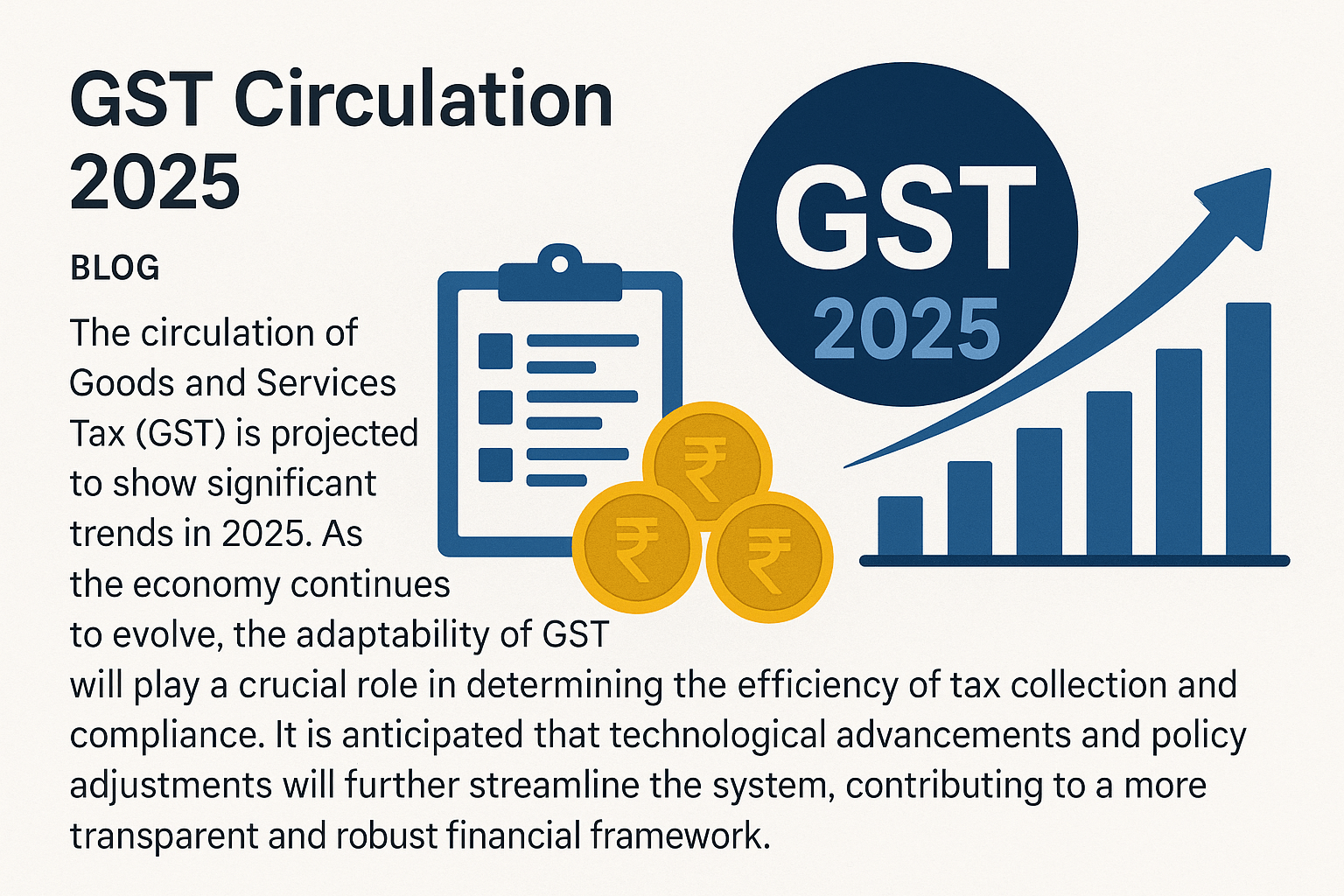
As India looks towards a brighter 2025, GST circulation is expected to become more efficient, transparent, and technologically advanced. Businesses will experience fewer hassles when filing returns, and tax authorities will have access to real-time data, reducing the chances of fraud and improving compliance rates.
The adoption of automation, AI, and blockchain will redefine how GST circulates through the economy, ensuring a more seamless and integrated process. As technology continues to shape the future, the GST system will evolve to meet the needs of a growing, digital economy, ensuring a brighter future for businesses and consumers alike.
In the coming years, India's GST system could serve as a model for other nations seeking to modernize their taxation processes and contribute to the ease of doing business. Stay tuned for the next chapter of GST evolution, where 2025 promises to bring in a whole new era of compliance, transparency, and convenience!